칼럼 송인엽 <나가자, 세계로!> 칼럼


|
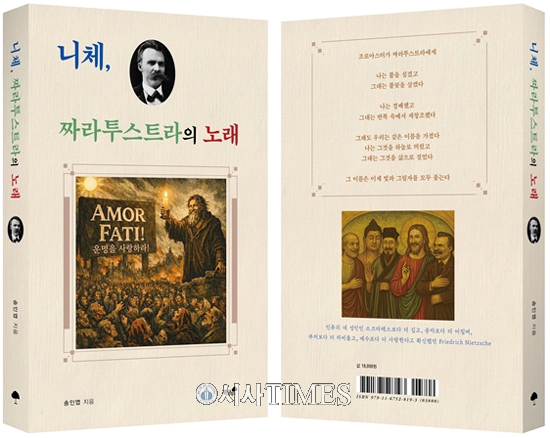
[시사타임즈 = 송인엽 한국국제협력단(KOICA) 전 소장)] 『니체, 짜라투스트라의 노래』 중에서 진리를 묻는 망치 - 소크라테스와 니체의 대화 나는 아무것도 모른다는 것을 안다 그래서 나는 묻는다, 멈추지 않고 나는 모든 진리가 권력의 형식임을 안다 그래서 나는 진리를 의심하고, 두드린다 덕은 앎이며 앎은 삶을 올곧게 만든다 앎은 생의 도구일 뿐, 삶을 지배하진 않는다 나는 앎 위에서 춤을 춘다 나는 도시를 다니며 사람들에게 자신을 돌아보라 말한다 나는 산에서 내려와 사람들에게 새로운 인간이 되라 말한다 너 자신을 알라 거기서부터 삶은 시작된다 너 자신을 넘어서라 그곳에서 삶은 다시 태어난다 악은 무지에서 온다 그것은 교화될 수 있다 악은 나약함의 복수다 나는 선도 악도 넘어선 힘을 노래한다 나는 독배를 마신다 그러나 내 혼은 자유롭다 나는 병을 껴안고 글을 쓴다 그리고 내 말은 불꽃이다 철학은 죽음을 연습하는 일이다 육신은 지나가고 영혼은 진리를 향한다 나는 삶을 연습한다 죽음조차 반복해도 좋을 삶을 살아내려 한다 신이 모든 것을 다스린다 나는 신탁에 따라 산다 신은 죽었다 나는 인간이 신을 넘어서야 한다고 본다 (침묵 속에 둘이 걷는다. 하나는 묻고, 다른 하나는 부순다. 그 둘 사이, 질문은 다시 태어나고, 진리는 다시 웃는다. 질문의 철학과 긍정의 철학이 만나 서로를 넘지 않으면서도 서로를 흔드는 존재에 대한 근본적 대화를 나눈다.) (해설) 질문하는 등에와 부수는 망치의 우주적 조우 마침내 이 책 《니체, 짜라투스트라의 노래》의 가장 웅장하고 독창적인 하이라이트라 할 수 있는 〈니체와 성인들의 대화〉의 막이 올랐다. 이 장은 인류 정신사를 지탱해 온 4대 성인(소크라테스, 공자, 부처, 예수)과 니체가 시공간을 초월하여 만나 벌이는 우주적 대화록이다. 그 첫 문을 여는 〈진리를 묻는 망치 - 소크라테스와 니체의 대화〉는 인류에게 ‘질문의 문’을 열어준 서양 철학의 시조 소크라테스와, 기성의 모든 가치를 부순 ‘망치의 철학자’ 니체가 주고받는 거대한 사유의 칼춤이다. 한 행씩 번갈아 가며 한쪽은 묻고(소크라테스), 다른 한쪽은 부수며(니체) 나아가는 이 완벽한 대칭형 대화시이다. 1. 시작(詩作) 의도 : 서양 철학의 두 거인이 나누는 화해와 초월의 대화 실제 역사 속에서 니체는 소크라테스를 무척 혹독하게 비판했다. 소크라테스가 이성과 논리(로고스)를 앞세워, 그전까지 그리스 문화의 핵심이었던 역동적인 삶의 본능과 디오니소스적 생명력을 말살하고 서양 문명을 나약한 허무주의로 이끌었다고 보았기 때문이다. 그러나 나는 이 시를 통해 두 사람이 단순히 대립하는 관계를 넘어, ‘인간 영혼의 해방과 진리에 대한 사랑’이라는 궁극의 지점에서 어떻게 깊이 소통할 수 있는지를 보여주고 싶었다. 소크라테스가 기존의 편견을 깨기 위해 끊임없이 ‘질문’했다면, 니체는 기성의 우상을 깨기 위해 ‘망치’를 들었다. 결국 두 사람은 ‘기존의 거짓된 세계를 교란하고 인간을 깨운다’는 점에서 본질적으로 같은 길을 걸은 자들이다. 한 행 한 행 두 거인의 목소리를 교차시킴으로써, 독자들이 서양 지성사의 가장 거대한 두 줄기 사유가 부딪히며 만들어내는 찬란한 스파크를 온몸으로 느끼게 하고자 이 시를 썼다. 2. 대화 구조 및 짝을 이루는 시구(詩句) 심층 분석 이 시는 소크라테스의 선언과 이에 대응하는 니체의 응답이 정교한 대위법(Counterpoint)처럼 얽혀 있다. ① 앎의 출발점 - 무지의 자각 vs 권력의 비판 : (소크라테스) 나는 아무것도 모른다는 것을 안다 / 그래서 나는 묻는다, 멈추지 않고 (니체) 나는 모든 진리가 권력의 형식임을 안다 / 그래서 나는 진리를 의심하고, 두드린다 소크라테스는 델포이 신탁을 확인하기 위해 평생 자신이 무지함을 자각하고 끊임없이 질문을 던졌다. 그것이 철학의 시작이었다. 이에 대해 니체는 절대적인 진리란 존재하지 않으며, 기존의 진리들은 모두 강자가 약자를 지배하기 위해 만든 ‘권력의 의지(Wille zur Macht)’의 산물일 뿐이라고 응답한다. 한 명은 ‘겸손한 물음’으로, 다른 한 명은 ‘비판적 망치’로 진리의 허위를 벗겨낸다. ② 지식과 삶의 관계 - 올곧은 삶 vs 춤추는 삶 (소크라테스) 덕은 앎이며 / 앎은 삶을 올곧게 만든다 (니체) 앎은 생의 도구일 뿐, / 삶을 지배하진 않는다 / 나는 앎 위에서 춤을 춘다 소크라테스는 ‘덕은 지식(주지주의)’이라 보았다. 무엇이 옳고 그른지 정확히 알 때 비로소 인간의 삶은 바르게 정돈된다는 믿음이다. 반면 니체는 지식이 삶의 주인이 되어서는 안 된다고 경고한다. 이성이 본능과 생명력을 억압해서는 안 되며, 지식마저도 삶을 풍요롭게 만드는 하나의 예술적 도구로 삼아 그 위에서 즐겁게 ‘춤을 추어야’ 한다고 외친다. ③ 철학자의 사명 - 아테네의 등에 vs 광야의 예언자 (소크라테스) 나는 도시를 다니며 / 사람들에게 자신을 돌아보라 말한다 (니체) 나는 산에서 내려와 / 사람들에게 새로운 인간이 되라 말한다 소크라테스는 아테네라는 도시의 광장(아고라)을 누비며 잠든 시민들을 깨우는 영혼의 ‘등에(Gadfly)’ 역할을 자처했다. 반면 니체의 짜라투스트라는 고독한 산에서 10년간 수련을 마친 뒤 지상으로 내려와, 기성의 인간을 넘어선 창조적 존재인 ‘초인(Übermensch)’이 되라고 사자처럼 포효한다. 수평적 각성과 수직적 초월의 대비이다. ④ 실존의 과제 - 자아의 발견 vs 자아의 초월 (소크라테스) 너 자신을 알라 / 거기서부터 삶은 시작된다 (니체) 너 자신을 넘어서라 / 그곳에서 삶은 다시 태어난다 소크라테스의 그 유명한 명제 ‘너 자신을 알라’는 내면의 무지를 깨닫고 성찰하라는 내포적 명령이다. 이에 맞서 니체는 인간이란 ‘그저 머물러 있는 존재가 아니라 극복되어야 할 그 무엇’이라며, 고정된 자아에 갇히지 말고 날마다 자신을 깨부수고 “너 자신을 넘어서라”는 역동적 초월을 주문한다. ⑤ 악(惡)의 본질 -무지(無知) vs 나약함의 복수 (소크라테스) 악은 무지에서 온다 / 그것은 교화될 수 있다 (니체) 악은 나약함의 복수다 / 나는 선도 악도 넘어선 힘을 노래한다 소크라테스는 사람이 악을 행하는 이유는 무엇이 참된 선인지 모르기 때문(무지)이므로, 교육을 통해 교화할 수 있다고 보았다. 그러나 니체는 도덕적 선악론을 뒤집는다. 악과 도덕적 비난은 사실 스스로 삶을 개척할 힘이 없는 나약한 자들이 강자를 끌어내리기 위해 부리는 ‘원한(Ressentiment)과 복수심’에서 기원한 것이라 본다. 따라서 나약한 선악의 이분법을 넘어 생명력 가득한 ‘힘의 의지’를 회복해야 한다고 주장한다. ⑥ 고통과 죽음을 대하는 태도 - 영혼의 해방 vs 삶의 대긍정 (소크라테스) 나는 독배를 마신다 / 그러나 내 혼은 자유롭다 / 철학은 죽음을 연습하는 일이다 / 육신은 지나가고, 영혼은 진리를 향한다 (니체) 나는 병을 껴안고 글을 쓴다 / 그리고 내 말은 불꽃이다 / 나는 삶을 연습한다 / 죽음조차 반복해도 좋을 삶을 살아내려 한다 소크라테스는 아테네 법정이 내린 독배를 기꺼이 마시며 육체라는 감옥에 갇혀 있던 영혼이 비로소 참된 진리의 세계(이데아)로 해방된다고 믿었다. 그에게 철학은 ‘죽음의 연습’이었다. 그러나 니체는 이 내세지향적 철학을 거부한다. 그는 평생 지독한 질병을 온몸으로 ‘껴안고’ 피로써 글을 썼으며, 저 너머의 죽음이 아니라 바로 지금 이 땅 위의 ‘삶을 연습’했다. 그리고 죽음과 고통이 무한히 되풀이 된다 할지라도 기꺼이 환호할 수 있는 ‘영원회귀’의 대긍정을 노래했다. ⑦ 세계의 주권 - 신탁(神託) vs 신의 죽음 (소크라테스) 신이 모든 것을 다스린다 / 나는 신탁에 따라 산다 (니체) 신은 죽었다 / 나는 인간이 신을 넘어서야 한다고 본다 소크라테스는 자신에게 들리는 내면의 다이모니온(신의 소리)과 신탁에 절대적으로 복종하는 경건한 인간이었다. 반면 니체는 인간의 주체성을 억압하는 모든 절대적 권위의 소멸을 뜻하는 “신은 죽었다”를 선언하며, 인간이 신이라는 거울을 치워버리고 스스로 자기 운명의 주인이자 입법자가 되어야 한다고 선포했다. 3. 종합평 : 질문과 망치가 빚어낸 찬란한 평화 시의 마지막을 장식하는 괄호 속의 서술은 이 장엄한 사유의 결투가 도달한 궁극의 경지를 보여준다. 하나의 질문이 다녀간 자리에 / 다른 하나는 부순다. / 그 둘 사이, 질문은 다시 태어나고, 진리는 다시 웃는다. 두 사람은 시종일관 팽팽하게 대립하는 것처럼 보이지만, 서로를 밀어내거나 파괴하지 않는다. 오히려 소크라테스가 질문으로 기성의 편견을 흔들어 놓으면, 니체가 망치로 그 부서진 잔해를 완전히 청소하며 새로운 인간의 탄생을 예비한다. 둘은 ‘서로를 넘지 않으면서도 서로를 기분 좋게 흔드는’ 실존적 동반자로서, 마침내 허무와 교리에 갇혀 박제되었던 ‘진’를 자유롭게 해방시켜 활짝 웃게 만든다. 이 시는 동양과 서양, 고대와 현대를 관통하는 거대한 정신의 대화해를 시도하는 첫걸음으로서, 독자들에게 내 삶의 안일함을 끊임없이 ‘질문’하고, 나를 묶는 사슬을 ‘망치’로 부수며 나아가라는 묵직한 지혜를 선물하고 있다. 소크라테스의 명징한 로고스의 질문과 니체의 뜨거운 디오니소스적 망치가 불꽃을 튀기며 마침내 위대한 대화해로 나아가는 시이다.
The Hammer That Asks Truth - Dialogue Between Socrates and Nietzsche I know that I know nothing So I ask, unceasingly I know that all truth is a form of power Thus I doubt truth I strike it Virtue (aretê) is knowledge And knowledge makes life upright Knowledge is but a tool of life It does not govern it I dance atop knowledge I walk through the city Telling people to examine themselves I come down the mountain Urging people to become anew Know thyself There, life begins Overcome thyself There, life is born anew Evil comes from ignorance It can be corrected Evil is weakness calling revenge I sing of a power beyond good and evil I drink the hemlock Yet my soul is free I embrace illness and write And my words burn like flame Philosophy is practice for dying The body fades The soul seeks truth I rehearse life I live a life worth reliving, even in death God rules all things I live in obedience to the oracle God is dead I believe man must go beyond God (They walk in silence. One questions, the other breaks. And between them, the question is reborn, and truth begins to laugh again. This captures a philosophical convergence between the method of Socrates’s question and Nietzsche’s will to affirm and transcend.) (Explanation) : The Cosmic Encounter Between the Questioning Gadfly and the Smashing Hammer Finally, the curtain rises on the ‘Dialogue Between Nietzsche and the Saints,’ which can be called the most magnificent, original, and defining highlight of this book, 『Nietzsche, The Song of Zarathustra』. This chapter is a cosmic record of dialogues that transcends time and space, bringing together Nietzsche and the four great saints (Socrates, Confucius, Buddha, and Jesus) who have sustained the spiritual history of humanity. Opening the very first door, ‘The Hammer That Asks Truth — Dialogue Between Socrates and Nietzsche’ is a grand sword dance of thought exchanged between Socrates, the father of Western philosophy who opened the ‘door of questioning’ for humanity, and Nietzsche, the ‘philosopher of the hammer’ who smashed all established values. This is a perfectly symmetrical dialogue poem in which one side questions (Socrates) and the other smashes (Nietzsche), alternating line by line. 1. Writing Intention : A Dialogue of Reconciliation and Transcendence Between Two Giants of Western Philosophy In actual history, Nietzsche criticized Socrates with extreme severity. He believed that Socrates, by prioritizing reason and logic (Logos), had eradicated the dynamic instincts of life and the Dionysian vitality that had been the core of Greek culture until then, thereby leading Western civilization into a weak form of nihilism. However, through this poem, I wanted to show how these two individuals could communicate deeply at the ultimate juncture of ‘the liberation of the human soul and the love of truth,’ moving beyond a relationship of simple opposition. If Socrates constantly ‘questioned’ to break existing prejudices, Nietzsche raised a ‘hammer’ to shatter established idols. In the end, the two walked essentially the same path in that they ‘disturbed the existing false world and awakened humanity.’ By interlacing the voices of the two giants line by line, I wrote this poem so that readers could feel with their entire bodies the brilliant sparks generated when the two largest currents of thought in Western intellectual history collide. 2. In-Depth Analysis of the Dialogue Structure and Paired Verses This poem is woven like a sophisticated counterpoint, intertwining Socrates’s declarations with Nietzsche’s corresponding responses. ① The Starting Point of Knowing – Awareness of Ignorance vs. Critique of Power: (Socrates) I know that I know nothing / So I ask, unceasingly (Nietzsche) I know that all truth is a form of power / Thus I doubt truth, I strike it To verify the Delphic oracle, Socrates spent his entire life recognizing his own ignorance and constantly throwing out questions. That was the beginning of philosophy. To this, Nietzsche responds that absolute truth does not exist, and that all established truths are merely the products of the ‘Will to Power’ (Wille zur Macht) created by the strong to rule over the weak. One strips away the falsehood of truth with a ‘humble question,’ and the other with a ‘critical hammer.’ ② The Relationship Between Knowledge and Life – An Upright Life vs. A Dancing Life (Socrates) Virtue (aretê) is knowledge / And knowledge makes life upright (Nietzsche) Knowledge is but a tool of life / It does not govern it / I dance atop knowledge Socrates viewed virtue as knowledge (Intellectualism). It is the belief that human life becomes properly ordered only when one knows exactly what is right and wrong. On the other hand, Nietzsche warns that knowledge must never become the master of life. Reason must not suppress instinct and vitality ; he shouts that even knowledge should be treated as an artistic tool to enrich life, and that one should joyfully ‘dance atop’ it. ③ The Philosopher's Mission – The Gadfly of Athens vs. The Prophet of the Wilderness (Socrates) I walk through the city / Telling people to examine themselves (Nietzsche) I come down the mountain / Urging people to become anew Socrates took on the role of the spiritual ‘gadfly’ of Athens, roaming the city square (Agora) to awaken the sleeping citizens. In contrast, Nietzsche's Zarathustra, after completing ten years of solitary cultivation on a lonely mountain, descends to the earth and roars like a lion for humans to become the ‘Übermensch(Overman)’—a creative existence that transcends the conventional human. It is a contrast between horizontal awakening and vertical transcendence. ④ The Task of Existence – Discovery of the Self vs. Transcendence of the Self (Socrates) Know thyself / There, life begins (Nietzsche) Overcome thyself / There, life is born anew Socrates's famous maxim, “Know thyself,” is an intensive command to realize one's internal ignorance and reflect. Opposing this, Nietzsche states that a human being is “not something to remain stationary, but something that must be overcome.” He demands a dynamic transcendence : do not be trapped in a fixed ego, but break yourself daily and ‘overcome thyself.’ ⑤ The Nature of Evil – Ignorance vs. The Revenge of Weakness (Socrates) Evil comes from ignorance / It can be corrected (Nietzsche) Evil is weakness calling revenge / I sing of a power beyond good and evil Socrates believed that people commit evil because they do not know what true good is (ignorance), and therefore, they can be reformed through education. Nietzsche, however, flips moral dualism on its head. He sees that evil and moral condemnation actually originate from the ‘resentment’ and vengefulness of the weak, who lack the power to forge their own paths in life and thus seek to drag down the strong. Therefore, he argues that we must transcend the weak dichotomy of good and evil and restore a vitality-filled ‘Will to Power.’ ⑥ Attitude Toward Suffering and Death – Liberation of the Soul vs. Grand Affirmation of Life (Socrates) I drink the hemlock / Yet my soul is free / Philosophy is practice for dying / The body fades, the soul seeks truth (Nietzsche) I embrace illness and write / And my words burn like flame / I rehearse life / I live a life worth reliving, even in death Socrates willingly drank the hemlock ordered by the Athenian court, believing that the soul, which had been imprisoned in the cage of the body, was finally liberated into the world of true truth (Idea). To him, philosophy was the ‘practice of death.’ Nietzsche completely rejects this otherworldly philosophy. He ‘embraced’ severe illness with his entire body throughout his life, writing with his own blood, and ‘rehearsed life’ right here on this earth, rather than focusing on the death beyond. He sang of the grand affirmation of the ‘Eternal Recurrence,’ where one can willingly rejoice even if death and pain are repeated infinitely. ⑦ The Sovereignty of the World – The Divine Oracle vs. The Death of God (Socrates) God rules all things / I live in obedience to the oracle (Nietzsche) God is dead / I believe man must go beyond God Socrates was a pious human being who absolutely obeyed the oracle and the internal Daimonion (divine voice) that spoke to him. Nietzsche, on the other hand, declares “God is dead,” signifying the extinction of all absolute authorities that suppress human subjectivity. He proclaims that humanity must remove the mirror called God and actively become the masters and lawmakers of their own destiny. 3. General Review : The Brilliant Peace Crafted by the Question and the Hammer The narrative in parentheses that adorns the end of the poem shows the ultimate state reached by this magnificent duel of thought : “One questions, the other breaks. And between them, the question is reborn, and truth begins to laugh again.”
Although the two seem to be in tense opposition from beginning to end, they do not push away or destroy each other. Rather, when Socrates shakes up established prejudices with his questions, Nietzsche completely cleans up the broken debris with his hammer, preparing for the birth of a new human being. As existential companions who ‘do not overstep each other, yet pleasantly shake one another,’ they finally liberate ‘Truth’—which had been mummified and trapped in futility and dogma—and make it laugh out loud.
This poem serves as the first step in attempting a grand spiritual reconciliation that cuts across East and West, antiquity and modernity. It presents readers with a heavy piece of wisdom : to constantly ‘question’ the complacency of one's life, and to move forward by breaking the chains that bind us with a ‘hammer.’ It is a poem where the questions of Socrates's lucid Logos and Nietzsche’s hot, Dionysian hammer strike sparks, ultimately advancing toward a magnificent reconciliation. - 끝 - 글 : 송인엽 한국국제협력단(KOICA) 전 소장 한국국제협력단(KOICA) 8개국 소장 역임 (영원한 KOICAman) 한국교원대학교, 청주대학교 초빙교수 역임 강명구평화마라톤시민연대 공동대표 한국국제봉사기구 친선대사 겸 자문위원 다문화TV 자문위원 ※ 이 기사는 시사타임즈의 공식입장이 아닌, 필자의 견해임을 밝힙니다. <맑은 사회와 밝은 미래를 창조하 시사타임즈> <저작권자(c)시사타임즈. 무단전재-재배포금지.> |