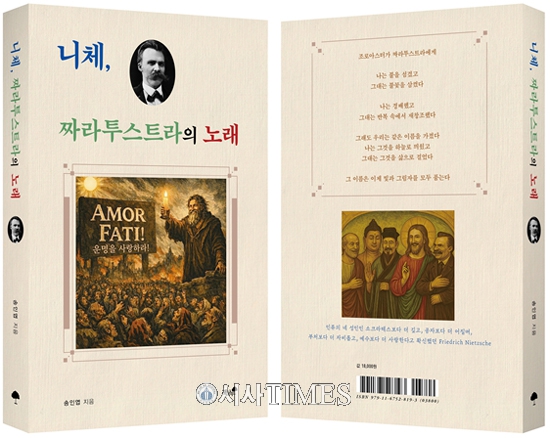
칼럼 송인엽 <나가자, 세계로!> 칼럼


|
[시사타임즈 = 송인엽 한국국제협력단(KOICA) 전 소장)] 『니체, 짜라투스트라의 노래』 중에서 예와 긍정 - 니체와 공자의 대화 사람됨이란 곧 도(道) 위에 서는 것이고 조화와 절제를 배우고, 오래된 것을 잇는 것이다 사람됨이란 경계를 넘는 것이고 나는 낡은 것을 부수고, 스스로 새 길을 엽니다 예(禮)는 방황하는 마음을 붙드는 구조이고 질서는 혼돈을 이기는 이치다 예는 때때로 생명의 본능을 억누르고 혼돈은 삶의 일부이며, 때로 창조의 근원입니다 군자는 허물을 두려워하지 않되 항상 그 허물을 고친다 나의 허물은 나의 힘이고 나는 그것을 고치지 않고, 넘어섭니다 천명(天命)을 아는 자가 담대하고 하늘을 거스르지 않음이 지혜다 나는 하늘을 거슬러 별을 만들고 운명을 따르지 않고, 운명을 받아들입니다 말은 절제되어야 하며 뜻은 행동으로 드러나야 한다 나는 말로 세계를 흔들고 침묵보다 더 먼 곳까지 날아갑니다 배우되 익히지 않으면 어리석고 생각하되 배우지 않으면 허망하다 나는 책을 찢고 삶을 읽으며 경전보다 경험이, 암기보다 창조가 먼저입니다 오래된 것에는 길의 뿌리가 있고 나는 옛것에서 새것을 본다 나는 옛것 속에 숨은 억압을 보고 그 뿌리를 뽑고, 새로운 나무를 심어요 조화는 성찰에서 오고 질서는 마음의 단련에서 온다 나는 파열의 리듬을 따르고 무질서 속에서 나만의 조화를 만듭니다 (그들은 서로를 바라본다. 한 사람은 묻고, 한 사람은 웃는다. 그러나 그 둘 사이엔 같은 물음이 떠 있다. “사람이여, 너는 어떻게 존재할 것인가?” 니체와 공자는 결코 같은 말을 하지 않지만, 인간의 존엄과 존재의 책임 앞에서는 나란히 한다. 두 사상의 교차에서 더 넓은 존재를 발견하게 된다.) (해설) 오래된 뿌리와 새로운 날개의 조화 소크라테스와의 불꽃 튀는 사유의 결투에 이어, 이번에는 동양 지성의 거대한 축인 공자와 서양 철학의 이단아 니체가 만났다. 〈예(禮)와 긍정 - 니체와 공자의 대화〉는 인류에게 사회적 관계 속의 ‘도덕과 질서의 문’을 열어준 공자와, 기성의 모든 도덕을 해체하고 개인의 주체성을 선언한 니체의 만남이다. 공자의 깊고 은은한 거문고 소리 같은 온고지신(溫故知新)의 사유와, 니체의 날카로운 파열음 같은 창조적 사유가 주고받는 이 아름다운 대화시이다. 1. 시작(詩作) 의도-집단의 질서와 개인의 초월, 그 위대한 만남 공자는 혼란스러운 춘추전국시대에 인간이 지녀야 할 마땅한 도리인 ‘예(禮)’와 ‘인(仁)’을 통해 사회적 조화와 평화를 이루고자 했던 성인이다. 반면 니체는 사회나 제도가 요구하는 집단적 도덕이 오히려 개인의 위대한 생명력을 억압한다고 보았던 철학자이다. 문명과 역사라는 거대한 숲을 가꾸려 했던 공자와, 그 숲을 뚫고 솟아오르는 불꽃 같은 개인이 되라고 외친 니체는 겉보기에 정반대의 길을 걷는 듯하다. 그러나 나는 이 시를 통해 두 사상가가 지향한 궁극의 목적지가 결국 하나, 즉 “인간은 어떻게 진정으로 존엄해질 수 있는가”에 대한 책임 있는 대답임을 보여주고 싶었다. 공자의 온화하고 단단한 ‘수양의 목소리’와 니체의 거침없고 역동적인 ‘창조의 목소리’를 대비시켜, 동서양을 대표하는 두 정신이 서로의 경계를 흔들며 더 넓은 인간학으로 나아가는 과정을 시로 형상화했다. 2. 대화 구조 및 짝을 이루는 시구(詩句) 심층 분석 이 시는 사회적 관계 안에서 자신을 단련하는 공자와, 기존의 모든 관계를 넘어서는 단독자로서의 니체가 팽팽한 긴장감을 유지하며 전개된다. ① 사람됨의 길 - 오래된 도(道) vs 스스로 여는 길 (공자) 사람됨이란 곧 도(道) 위에 서는 것이고 / 조화와 절제를 배우고, 오래된 것을 잇는 것이다 (니체) 사람됨이란 경계를 넘는 것이고 / 나는 낡은 것을 부수고, 스스로 새 길을 엽니다 공자에게 참된 인간(인간다운 인간)이란 선인들이 닦아놓은 보편적인 도리(道)를 따르고, 과거의 훌륭한 문화와 제도를 계승(술이부작, 述而不作)하는 것이다. 그러나 니체에게 참된 인간이란 안주하는 자가 아니라 ‘경계를 넘는 자’이다. 과거의 길을 잇는 것에 만족하지 않고, 낡은 가치를 부수어 가며 오직 자신만의 새로운 길을 개척하는 것이 참된 인간의 증거라고 대답한다. ② 예(禮)와 혼돈 - 방황을 잡는 질서 vs 창조의 근원인 혼돈 (공자) 예(禮)는 방황하는 마음을 붙드는 구조이고 / 질서는 혼돈을 이기는 이치다 (니체) 예는 때때로 생명의 본능을 억누르고 / 혼돈은 삶의 일부이며, / 때로 창조의 근원입니다 공자는 인간 내면의 무질서와 방황을 잡아주는 사회적 규범인 ‘예(禮)’를 중시했습니다. 예가 있어야만 비로소 사회가 평화로워진다. 반면 니체는 예의 그러한 구조가 인간 본연의 역동적인 생명력을 가두는 감옥이 될 수 있다고 경고한다. 니체에게 ‘혼돈’은 제거해야 할 대상이 아니라, 밤하늘의 빛나는 별을 탄생시키기 위해 인간이 내면에 반드시 품고 있어야 할 ‘창조의 태반’이다. ③ 허물을 대하는 태도 - 고침(改過) vs 초월(超越) (공자) 군자는 허물을 두려워하지 않되 / 항상 그 허물을 고친다 (니체) 나의 허물은 나의 힘이고 / 나는 그것을 고치지 않고, / 넘어섭니다 공자는 허물이 있을 때 머뭇거리지 말고 고쳐야 한다(과즉물탄개, 過則勿憚改)고 가르쳤다. 끊임없는 반성과 교정을 통해 완성형 인간인 ‘군자’로 나아가는 과정이다. 그러나 니체는 자신의 약점이나 허물조차도 나를 구성하는 소중한 ‘힘의 원천’으로 여긴다. 그것을 도덕적으로 단죄하고 고치려 애쓰기보다는, 그 모든 상처와 결점까지 껴안고 더 높은 단계로 스스로를 도약시켜 ‘초월’해 버린다. ④ 세계관과 운명 - 천명(天命) 순응 vs 아모르 파티(Amor Fati) (공자) 천명(天命)을 아는 자가 담대하고 / 하늘을 거스르지 않음이 지혜다 (니체) 나는 하늘을 거슬러 별을 만들고 / 운명을 따르지 않고, / 운명을 받아들입니다 공자는 나이 오십에 ‘천명(하늘의 뜻)’을 깨달았다고 했다(지천명, 知天命). 우주의 절대적인 질서에 순응하고 그것을 아는 것이 인간의 최고 지혜이다. 니체 역시 운명을 이야기하지만 결이 다르다. 니체는 주어진 천명에 복종하는 것이 아니라, 자신에게 닥쳐오는 잔인한 운명마저도 온전히 사랑해 버리는 ‘운명애(Amor Fati)’를 말한다. 수동적으로 따르는 것이 아니라 운명을 기꺼이 삼켜버림으로써 자기 삶의 하늘에 스스로 별을 띄우는 능동성을 보여준다. ⑤ 학문과 실천 - 고전의 체화 vs 삶이라는 진짜 경전 (공자) 배우되 익히지 않으면 어리석고 / 생각하되 배우지 않으면 허망하다 (니체) 나는 책을 찢고 삶을 읽으며 / 경전보다 경험이, / 암기보다 창조가 먼저입니다 공자의 《논어》 첫 구절인 ‘학이시습지(學而時習之)’의 사유이다. 성인의 말씀을 배우고 사색하여 내면화하는 것이 앎의 정석이다. 반면 니체는 활자 속에 갇힌 죽은 지식을 거부한다. 책과 경전을 과감히 찢어발기고, 살아 움직이는 날 것 그대로의 ‘현실과 경험’을 읽어내야 한다고 외친다. 남의 생각을 외우는 암기가 아니라, 나의 삶을 직접 짓는 창조가 우선이라고 선언한다. ⑥ 역사와 조화 - 옛것의 뿌리 vs 파열음 속의 새 조화 (공자) 오래된 것에는 길의 뿌리가 있고 / 나는 옛것에서 새것을 본다 (니체) 나는 옛것 속에 숨은 억압을 보고 / 그 뿌리를 뽑고, / 새 나무를 심어요 공자의 ‘온고지신’ 정신이다. 역사의 유구한 전통 속에 진리가 숨어있다는 믿음이다. 그러나 니체는 그 역사와 옛것의 이면에 숨겨진 권력의 억압과 위선을 꿰뚫어 본다. 전통이라는 이름으로 인간을 얽매는 오래된 뿌리를 과감히 뽑아버리고, 지금 이곳에 새로운 생명의 나무를 심어야 한다고 주장한다. 공자가 단정하고 평온한 ‘조화’를 추구했다면, 니체는 기존의 질서가 깨지는 ‘파열의 리듬’ 속에서 역설적인 나만의 역동적 조화를 만들어낸다. 3. 종합평 : 인간 존엄이라는 하나의 거대한 동심원 이 아름다운 시의 결말은 시대를 초월한 두 거인의 묵직한 영혼의 공명으로 끝을 맺는다. 그들은 서로를 바라본다. 한 사람은 묻고, 한 사람은 웃는다. / 그러나 그 둘 사이엔 같은 물음이 떠 있다. / “사람이여, 너는 어떻게 존재할 것인가?” 공자와 니체는 쓰는 언어도, 살았던 시대도, 세상을 바라보는 렌즈도 완전히 달랐다. 공자는 ‘우리’라는 공동체 속에서 개인이 어떻게 올바르게 서야 하는가를 고민했고, 니체는 ‘나’라는 단독자가 어떻게 세상의 억압을 뚫고 초인으로 우뚝 설 것인가를 외쳤다. 그러나 이 둘은 결국 “인간은 결코 짐승처럼 살아서는 안 되며, 자신의 실존에 대해 스스로 무한한 책임을 지는 엄숙하고도 존엄한 존재가 되어야 한다”는 거대한 질문 앞에서 나란히 손을 잡는다. 공자의 단단한 대지(뿌리)가 없으면 니체의 날개는 허공에서 길을 잃을 것이고, 니체의 거침없는 날개(창조)가 없다면 공자의 대지는 자칫 딱딱하게 굳어버릴지 모른다. 이 시는 두 사상의 아름다운 조우를 통해 우리에게 더 깊고 넓은 인간 존재의 가능성을 열어주고 있다. 동양의 은은한 등불 같은 공자의 사상과 서양의 번개 같은 니체의 사상이 서로 부딪쳐 빚어내는 사유의 하모니가 참으로 아름다운 시이다. 겉으로는 대립하는 듯 보이나 결국 ‘인간의 위대함’을 향해 나란히 걸어가는 두 사람의 뒷모습이 시의 마지막 연에서 아련하고도 장엄하게 그려진다.
Decorum and Affirmation - Dialogue Between Nietzsche and Confucius To be human is to stand upon the Way (Dao) To learn harmony and restraint, and inherit the old To be human is to cross boundaries I break the old, and make a new path by myself Decorum (Li) is the frame that steadies a wandering heart Order is the logic that overcomes chaos Decorum often suppresses the instincts of life Chaos is part of existence And at times, the root of creation A noble man fears not his faults But always strives to amend them My faults are my strength I do not mend them I transcend them He who knows Heaven’s command walks with courage To not defy Heaven is wisdom I defy Heaven and fashion stars I do not follow destiny I accept destiny Words should be measured And intentions shown through action I shake the world with words They flew farther than silence ever could To study and not practice is folly To think without learning is vain I tear pages and read life itself Experience before scripture Creation before memorization In the old lies the root of the Way(Dao) I find the new through what has been I see repression hidden in the old I uproot it And plant a new tree Harmony comes from reflection Order from training the heart I follow the rhythm of rupture I craft my own harmony in disorder (They gaze at each other. One asks, the other smiles. And between them hovers the same question, “Human, how will you exist?” Nietzsche and Confucius never speak in the same tome, but in the face of human dignity and the responsibility of being— they stand side by side. From the crossing of these two traditions, they glimpse a broader horizon of human possibility.)
[Explanation] The Harmony of Ancient Roots and New Wings Following the spark-flying duel of thought with Socrates, this time Confucius, the giant axis of Eastern intellect, meets Nietzsche, the heretic of Western philosophy. ‘Decorum and Affirmation — Dialogue Between Nietzsche and Confucius’ is an encounter between Confucius, who opened the ‘door of order and morality’ within social relationships for humanity, and Nietzsche, who deconstructed all established morality and declared the subjectivity of the individual. This beautiful dialogue poem showcases an exchange between Confucius’s thought of learning the old to know the new (On-go-ji-shin), which resembles the deep and gentle sound of a geomungo (traditional Korean zither), and Nietzsche’s creative thought, which resembles a sharp, rupturing sound. 1. Writing Intention : The Grand Encounter of Collective Order and Individual Transcendence Confucius was a saint who sought to achieve social harmony and peace during the chaotic Spring and Autumn and Warring States periods through Li (Decorum/Propriety) and Ren (Benevolence)—the proper duties that human beings ought to possess. On the other hand, Nietzsche was a philosopher who believed that the collective morality demanded by society or institutions actually suppresses the magnificent vitality of the individual. Confucius, who tried to cultivate a massive forest of civilization and history, and Nietzsche, who shouted for individuals to become like sparks rising through that forest, seem to walk completely opposite paths on the surface. However, through this poem, I wanted to show that the ultimate destination aimed at by both thinkers is actually one and the same : a responsible answer to the question, “How can human beings truly become dignified?” By contrasting Confucius’s gentle and solid ‘voice of self-cultivation’ with Nietzsche’s unstoppable and dynamic ‘voice of creation,’ I shaped into poetry the process by which these two minds, representing the East and the West, shake each other's boundaries to advance toward a broader study of humanity. 2. In-Depth Analysis of the Dialogue Structure and Paired Verses This poem unfolds while maintaining a tense balance between Confucius, who disciplines himself within social relationships, and Nietzsche, who exists as a solitary individual transcending all existing relationships. ① The Path of Being Human – The Ancient Way (Dao) vs. A Self-Opened Path (Confucius) To be human is to stand upon the Way (Dao) / To learn harmony and restraint, and inherit the old (Nietzsche) To be human is to cross boundaries / I break the old, and make a new path by myself For Confucius, a true human being (a humanlike human) is one who follows the universal principles (Dao) paved by predecessors and inherits the excellent culture and institutions of the past (Su-ri-bu-jak—transmitting but not creating). For Nietzsche, however, a true human being is not one who becomes complacent, but one who ‘crosses boundaries.’ He answers that the proof of being a true human lies in breaking old values and pioneering one's own unique new path, rather than being satisfied with merely continuing the path of the past. ② Decorum (Li) and Chaos – The Order That Steadies Wandering vs. Chaos as the Source of Creation (Confucius) Decorum (Li) is the frame that steadies a wandering heart / Order is the logic that overcomes chaos (Nietzsche) Decorum often suppresses the instincts of life / Chaos is part of existence / And at times, the root of creation Confucius emphasized Li (Decorum), the social norm that regulates the internal disorder and wandering of human beings. Only when Li exists can society become peaceful. Conversely, Nietzsche warns that such a structure of decorum can become a prison that confines the inherent, dynamic vitality of human beings. For Nietzsche, ‘chaos’ is not an object to be eliminated, but the ‘creative placenta’ that a human must harbor internally to give birth to a dancing star in the night sky. ③ Attitude Toward Faults – Amendment (改過) vs. Transcendence(超越) (Confucius) A noble man fears not his faults / But always strives to amend them (Nietzsche) My faults are my strength / I do not mend them / I transcend them Confucius taught that when one has faults, one should not hesitate to correct them (過則勿憚改). It is a process of advancing toward the ‘Junzi’ (noble man)—the perfected human—through constant self-reflection and correction. Nietzsche, however, regards even his own weaknesses and faults as a precious ‘source of strength’ that constitutes who he is. Rather than morally judging and struggling to correct them, he embraces all those wounds and flaws, using them to leap forward and ‘transcend’ into a higher stage. ④ Worldview and Destiny – Conformity to Heaven’s Command vs. Amor Fati (Confucius) He who knows Heaven’s command walks with courage / To not defy Heaven is wisdom (Nietzsche) I defy Heaven and fashion stars / I do not follow destiny / I accept destiny Confucius said that at the age of fifty, he realized the ‘Command of Heaven’ (Ji-cheon-myeong, 知天命). Conforming to and knowing the absolute order of the universe is the highest wisdom for a human being. Nietzsche also speaks of destiny, but his texture is different. Instead of obeying a given heavenly command, Nietzsche speaks of ‘Amor Fati’—loving even the cruel destiny that befalls oneself entirely. He shows an active agency that does not passively follow but willingly swallows destiny, thereby floating his own stars in the sky of his life. ⑤ Scholarship and Practice – Internalization of Classics vs. Life as the True Scripture (Confucius) To study and not practice is folly / To think without learning is vain (Nietzsche) I tear pages and read life itself / Experience before scripture / Creation before memorization This reflects the thought of the very first line of Confucius's Analects : Hak-i-si-seup-ji(學而時習之, To learn and practice it timely). Learning the words of the sages, contemplating them, and internalizing them is the standard of knowledge. On the other hand, Nietzsche rejects dead knowledge trapped in printed letters. He shouts that we must boldly tear up books and scriptures and read the raw, living reality and experience. He declares that creation—building one's own life directly—takes precedence over memorization, which is merely reciting another's thoughts. ⑥ History and Harmony – The Roots of the Old vs. A New Harmony Within the Rupture (Confucius) In the old lies the root of the Way (Dao) / I find the new through what has been (Nietzsche) I see repression hidden in the old / I uproot it / And plant a new tree This is the spirit of Confucius's On-go-ji-shin (溫故知新, understanding the new by renewing old secrets). It is the belief that truth is hidden within the long tradition of history. However, Nietzsche pierces through the oppression and hypocrisy of power hidden behind that history and the old ways. He argues that we must boldly uproot the ancient roots that bind humans in the name of tradition, and plant a new tree of life right here and now. While Confucius pursued a neat and peaceful ‘harmony,’ Nietzsche crafts his own paradoxical, dynamic harmony within the ‘rhythm of rupture’ where the existing order breaks down. 3. General Review : A Single, Massive Concentric Circle Called Human Dignity The conclusion of this beautiful poem ends with a heavy resonance of the souls of the two giants across spaces eras : “They gaze at each other. One asks, the other smiles. But between them hovers the same question, ‘Human, how will you exist?’” Confucius and Nietzsche were completely different in the language they used, the eras they lived in, and the lenses through which they viewed the world. Confucius contemplated how an individual should stand upright within the community called ‘we,’ while Nietzsche shouted about how a solitary individual called ‘I’ should break through the world's oppression and stand tall as an Overman. Yet, in the end, they join hands before a massive question : “Humans must never live like beasts; they must become solemn and dignified beings who bear infinite responsibility for their own existence.” Without Confucius's solid earth (roots), Nietzsche's wings might lose their way in the empty air ; without Nietzsche's relentless wings (creation), Confucius's earth might become rigidly hardened. Through the beautiful encounter of these two systems of thought, this poem opens up a deeper and wider possibility for human existence. It is truly a beautiful poem showcasing a harmony of thought created by the collision between Confucius's philosophy, which resembles a gentle Eastern lamp, and Nietzsche's philosophy, which resembles Western lightning. Though they appear to conflict on the surface, the final stanza vividly and sublimely paints the view of their backs as they walk side-by-side toward ‘human greatness.’ - 끝 - 글 : 송인엽 한국국제협력단(KOICA) 전 소장 한국국제협력단(KOICA) 8개국 소장 역임 (영원한 KOICAman) 한국교원대학교, 청주대학교 초빙교수 역임 강명구평화마라톤시민연대 공동대표 한국국제봉사기구 친선대사 겸 자문위원 다문화TV 자문위원 ※ 이 기사는 시사타임즈의 공식입장이 아닌, 필자의 견해임을 밝힙니다.
<맑은 사회와 밝은 미래를 창조하 시사타임즈> <저작권자(c)시사타임즈. 무단전재-재배포금지.> |